The Highlands Ranch & Greater Denver Metro Plumbing Journal
By Bravo Initiative, LLC
March - Leak Detection - A Recent Job & Some Homeowner Tips
By Les, Owner, Bravo Initiative LLC
What I Walked Into
Earlier this month, I got a call from a homeowner here in the Denver Metro Area who said their water bill had jumped for no clear reason. They hadn’t noticed any obvious leaks, no water on the floors, nothing dramatic. But they did mention a faint musty smell in their hallway and a small warm spot on the hardwood floor near the kitchen.
When I arrived, the house looked perfectly normal at first glance. It was a well-kept single-family home, nothing unusual. But when I stepped onto that warm section of flooring, I could feel it right away. It wasn’t hot, just slightly warmer than the surrounding area — which is often a sign of a slab leak from a hot water line underneath.
That’s usually how these jobs start. Nothing flooding. Nothing spraying. Just small signs that something isn’t right.
The Problem
After I checked the water meter and saw it was still moving even though every faucet and appliance was off, that confirmed we were dealing with a hidden leak. The first step was ruling out the obvious. I checked under every sink, around the toilets, behind the washing machine, and near the water heater. Everything there was dry. No loose fittings, no dripping valves, nothing visible.
That’s usually when I start thinking about what’s happening under the slab.
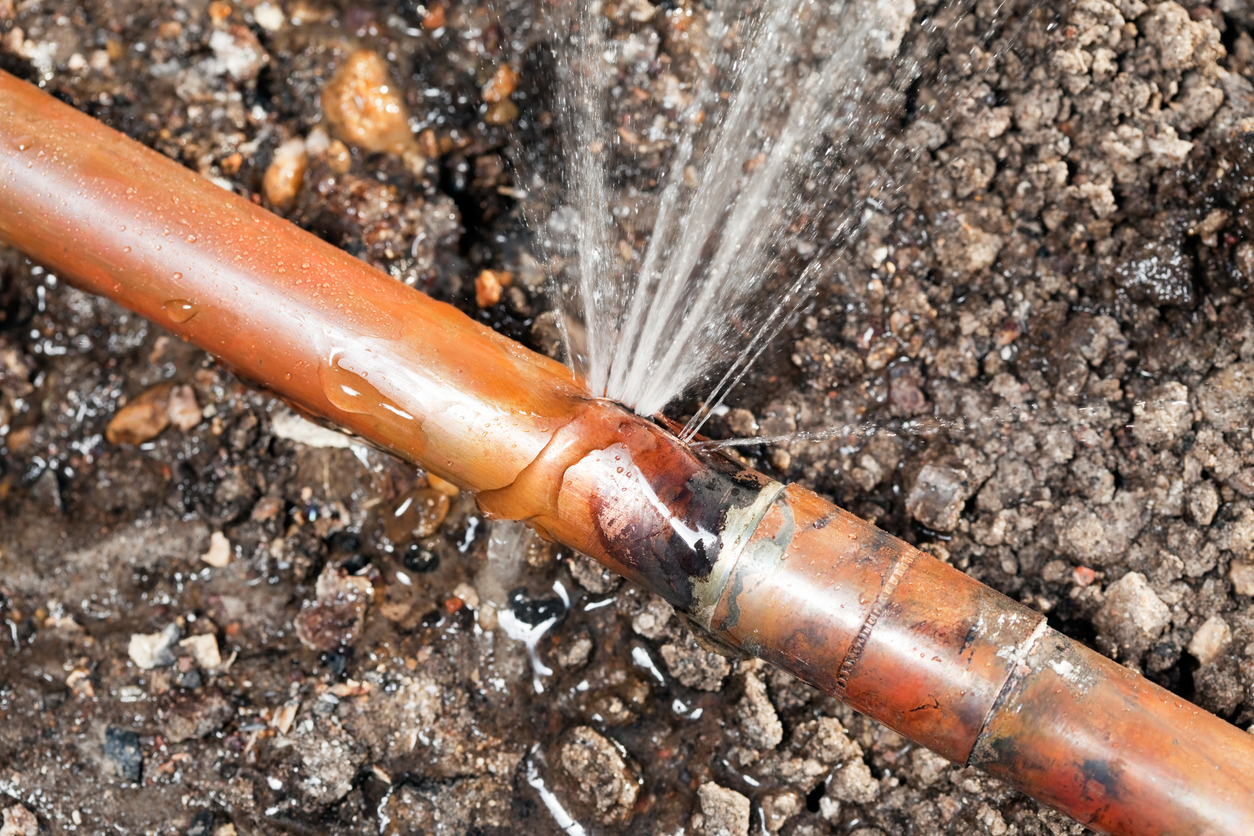
In this case, the leak was coming from a copper pipe buried beneath the concrete foundation. Over time, copper lines can develop small pinhole leaks. It doesn’t take much — mineral content in the water, slight shifts in the foundation, or normal wear from pressure changes can slowly weaken the pipe wall.
The tricky part is that the water doesn’t immediately show up inside the house. It spreads beneath the concrete first. It can soften the soil, create damp areas under flooring, and sometimes cause small warm spots if it’s a hot water line. That’s what this homeowner noticed — not water pooling, but a faint warm section of the floor and a light musty smell.
Leaks like this are hard on homeowners because there’s nothing dramatic happening. No spraying pipe. No flooding. Just small warning signs that something isn’t right.
The Process
To narrow down the location, I used electronic leak detection equipment. It works by listening for subtle sound differences beneath the slab. Running water makes a distinct noise, even when it’s buried under concrete. The equipment helps isolate where that sound is strongest.
Once I had a likely location, I confirmed it with a pressure test. That tells me whether the system is losing pressure and helps verify we’ve found the right section.
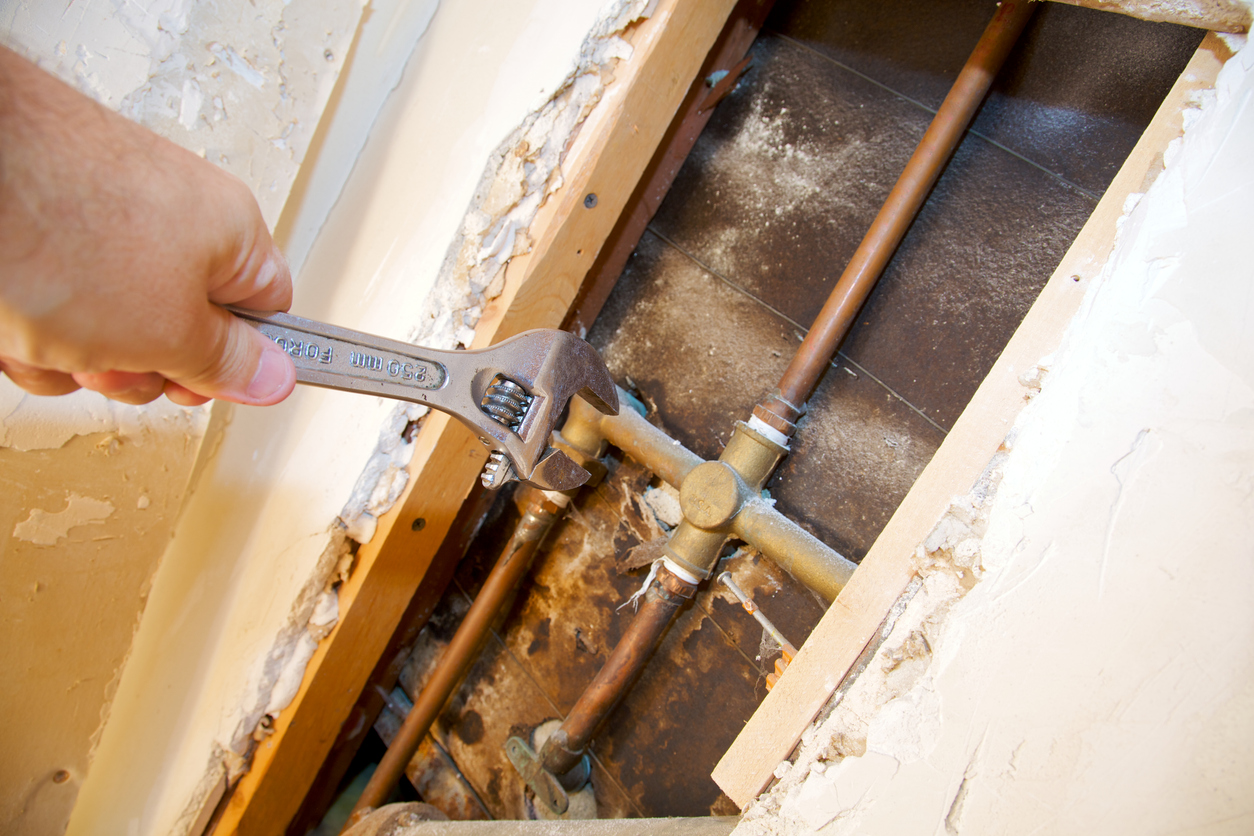
After identifying the damaged pipe area, I explained the options. One approach is to cut into the slab, open the concrete, and repair that exact section. The other option is to reroute the water line through walls or ceiling space so we avoid disturbing the foundation.
In this situation, rerouting made more sense. The leak was isolated to one line, and creating a new overhead path would reduce the chance of future slab issues. It also meant less mess and faster recovery for the homeowner.
Before turning everything back to normal, I pressure-tested the line again. The system held steady. Once water service was restored, we watched the meter closely. It didn’t move. That’s usually the moment people start to breathe easier.
The Outcome
Once the repair was complete and pressure was stable, things started improving quickly. The musty smell began fading within days as the trapped moisture underneath started drying out. The homeowner had been bracing for major construction — ripping up flooring, cutting concrete, possibly dealing with weeks of repairs.
Instead, we avoided most of that.
Over the next couple of weeks, the flooring dried out fully. There were no further moisture readings, and no new signs of dampness. The following water bill returned to normal, which gave them additional confirmation that the problem was resolved.
From the outside, nothing looked different. But for the homeowner, it made a big difference. The uncertainty was gone, and they knew the issue had been handled properly.
DIY Advice
Before I left, I went over a few simple habits that can help catch leaks early:
Watch your water bill. If usage jumps and your routine hasn’t changed, that’s worth investigating.
Check your water meter. Turn off everything in the house and look at the dial. If it’s moving, water is flowing somewhere.
Feel your floors occasionally. Warm or slightly damp spots can be early signs of a hidden leak.
Listen carefully at night. If you hear water running when nothing is on, don’t ignore it.
Pay attention to new smells. Musty odors without visible water often mean moisture is trapped somewhere.
They’ve been keeping up with those checks, and everything has stayed dry and steady since the repair.
Professional Insight
Not all leaks are obvious. Some show up fast. Others develop slowly over months. Slab leaks and small pipe corrosion issues don’t usually make a big scene. They show up as small clues — a warm floor, a strange smell, or a water bill that doesn’t make sense.
Homeowners can monitor those warning signs, and they should. But once there’s a confirmed leak, proper testing matters. Leak detection equipment and pressure testing allow us to locate the issue accurately without unnecessary cutting or guesswork.
It’s not about assuming the worst. It’s about handling a small issue before it turns into something that affects flooring, framing, or the foundation.
Closing Thoughts
Leak detection jobs remind me how important early signs really are. Most serious plumbing damage starts quietly. If something feels off — a smell, a warm floor, a strange water bill — it’s worth checking.
If you’re in the Denver Metro Area and notice anything similar, I’m always willing to take a look and help you figure out what’s going on.
[https://www.bravoplumbinglittleton.com/leakdetectionrepairservices]

Schedule a Professional Inspection
Ready to schedule a professional inspection? Contact us today.

Have a question? Give us a call
We are happy to answer any questions you have :)
250 E Highlands Ranch Pkwy, Highlands Ranch, CO 80126, United States
720-740-6737
Master Plumbing License - MP.03000238
Contractor License - PC.0004060